

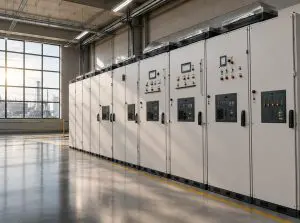
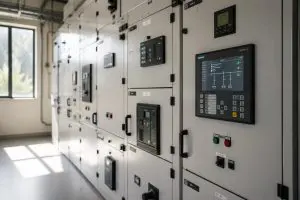
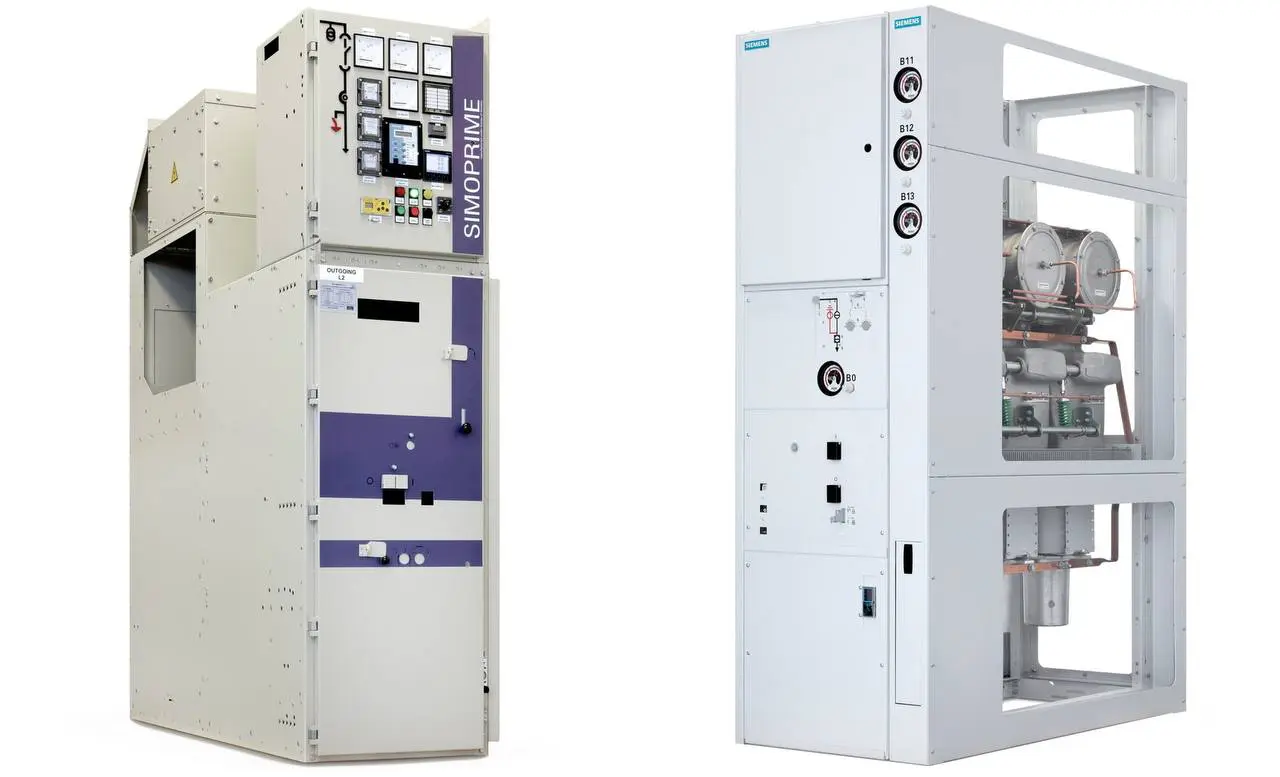
When selecting medium-voltage switchgear for an industrial or infrastructure project, one of the main decisions is choosing between AIS and GIS technology.
AIS, or Air Insulated Switchgear, uses air as the main insulation medium between electrical components. It is widely used in industrial facilities, power plants, utility applications and infrastructure projects.
One of the main advantages of AIS is its relatively simple design and easy accessibility for inspection and maintenance. It is also commonly selected for projects where sufficient installation space is available.
GIS, or Gas Insulated Switchgear, uses an insulating gas inside sealed compartments. Because of its compact construction, GIS requires significantly less installation space compared to conventional AIS systems.
This makes GIS a suitable solution for applications where space is limited, such as urban substations, industrial facilities with restricted electrical rooms, offshore applications and other demanding environments.
The choice between AIS and GIS should not be based only on the initial cost.
Important factors include:
available installation space
environmental conditions
maintenance requirements
project lifetime
system reliability
future expansion requirements
technical specifications of the project
Both technologies can provide reliable medium-voltage power distribution when they are properly selected and engineered for the application.
At String Solutions, we support industrial and EPC projects with switchgear selection, technical evaluation, equipment sourcing and project-specific electrical solutions.