

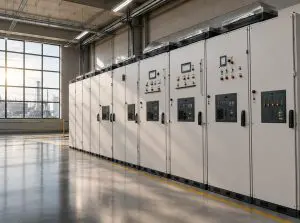
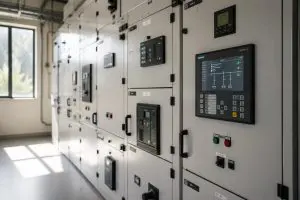
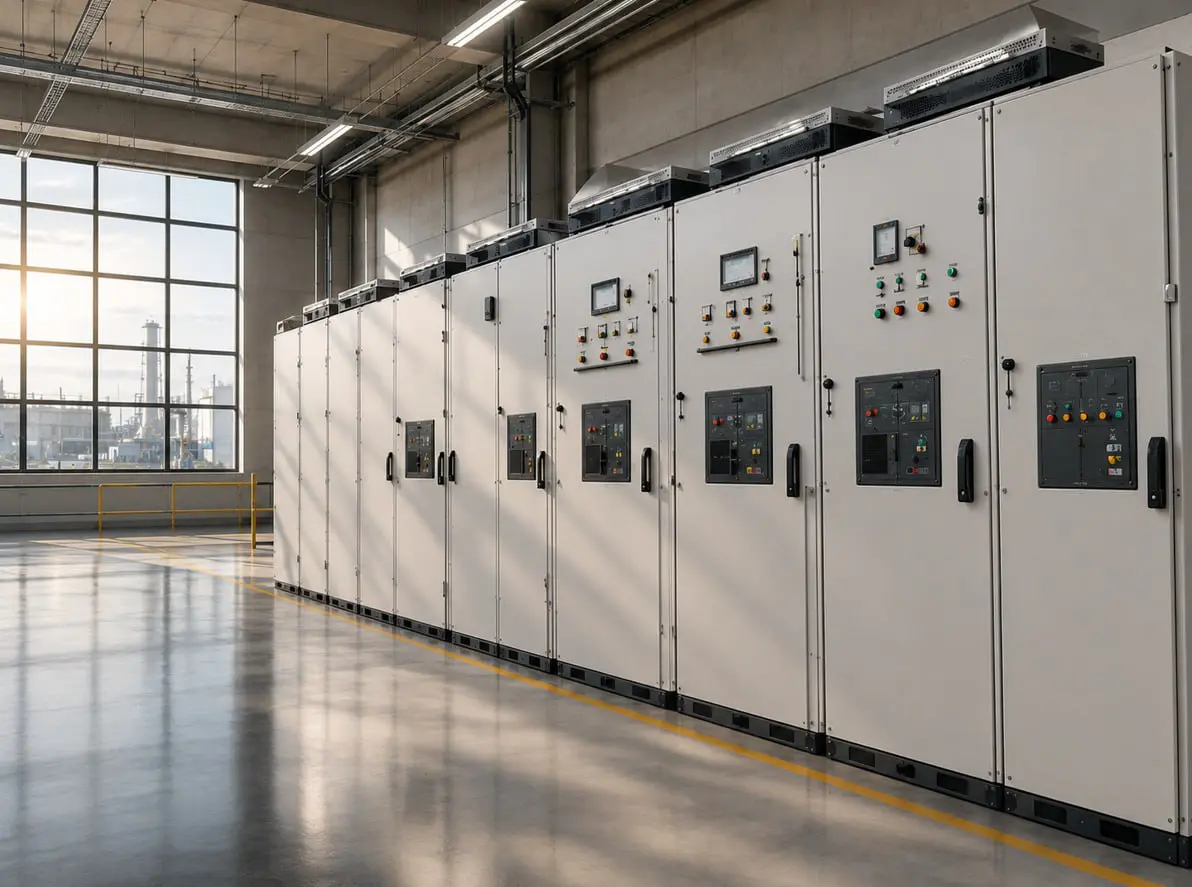
Digital switchgear combines conventional power distribution equipment with intelligent monitoring, communication and control technologies.
It helps operators access more information about the electrical system and manage equipment more efficiently.
Traditional switchgear is mainly designed to control, protect and isolate electrical equipment.
Digital switchgear goes one step further by adding intelligent devices, sensors and communication systems that make more operational data available to the user.
Information such as current, voltage, equipment status, alarms and operating conditions can be monitored and transferred to control or automation systems.
This gives operators better visibility of what is happening inside the electrical network.
One of the main advantages of digital switchgear is easier system monitoring.
Instead of relying only on manual inspections, important information can be continuously collected and made available through monitoring and control systems. This allows operators to identify abnormal conditions more quickly and respond before they develop into larger problems.
Better Access to Operational Data
Digital switchgear can provide real-time information about the condition and performance of electrical equipment.
Depending on the system configuration, operators may monitor parameters such as:
- Current and voltage
- Power and energy values
- Circuit breaker status
- Protection relay information
- Equipment operating conditions
- Alarm and fault indications
- Temperature and other condition-monitoring data
Having this information available in one system makes electrical network supervision easier and more transparent
Integration with Automation Systems
Another important difference is communication capability.
Digital switchgear can exchange information with SCADA, energy management and industrial automation systems through standard communication protocols.
This allows electrical equipment to become part of a wider plant monitoring and control infrastructure.
Operators can access important information from a central control system instead of checking every piece of equipment individually.
Improved Maintenance Planning
Access to equipment data can also support better maintenance decisions.
Traditional maintenance is often based on fixed schedules or periodic inspections. With digital monitoring, maintenance teams can use operating data and equipment condition information to better understand when inspection or maintenance may be required.
This can help reduce unnecessary maintenance activities while allowing potential problems to be detected earlier.
Faster Fault Identification
When a fault occurs, digital systems can provide detailed information about alarms, protection events and equipment status.
This makes troubleshooting easier and can help maintenance teams identify the source of a problem more quickly.
Faster fault identification can contribute to reducing downtime and improving overall system availability.
Digital Switchgear and the Future of Power Distribution
As industrial facilities become more connected and automated, electrical distribution systems are also becoming more intelligent.
Digital switchgear supports this transition by combining reliable power distribution and protection equipment with monitoring, communication and data capabilities.
The main difference is not simply the switchgear itself, but the amount of useful information available from the electrical system.
By providing greater visibility, easier integration and better access to operational data, digital switchgear can help industrial facilities operate their electrical networks more efficiently, reliably and intelligently.